

5 Signs Your Sales Team is Operating in Chaos (and How to Fix It)
Most companies don’t realize just how much invisible revenue slips away because of sales chaos.
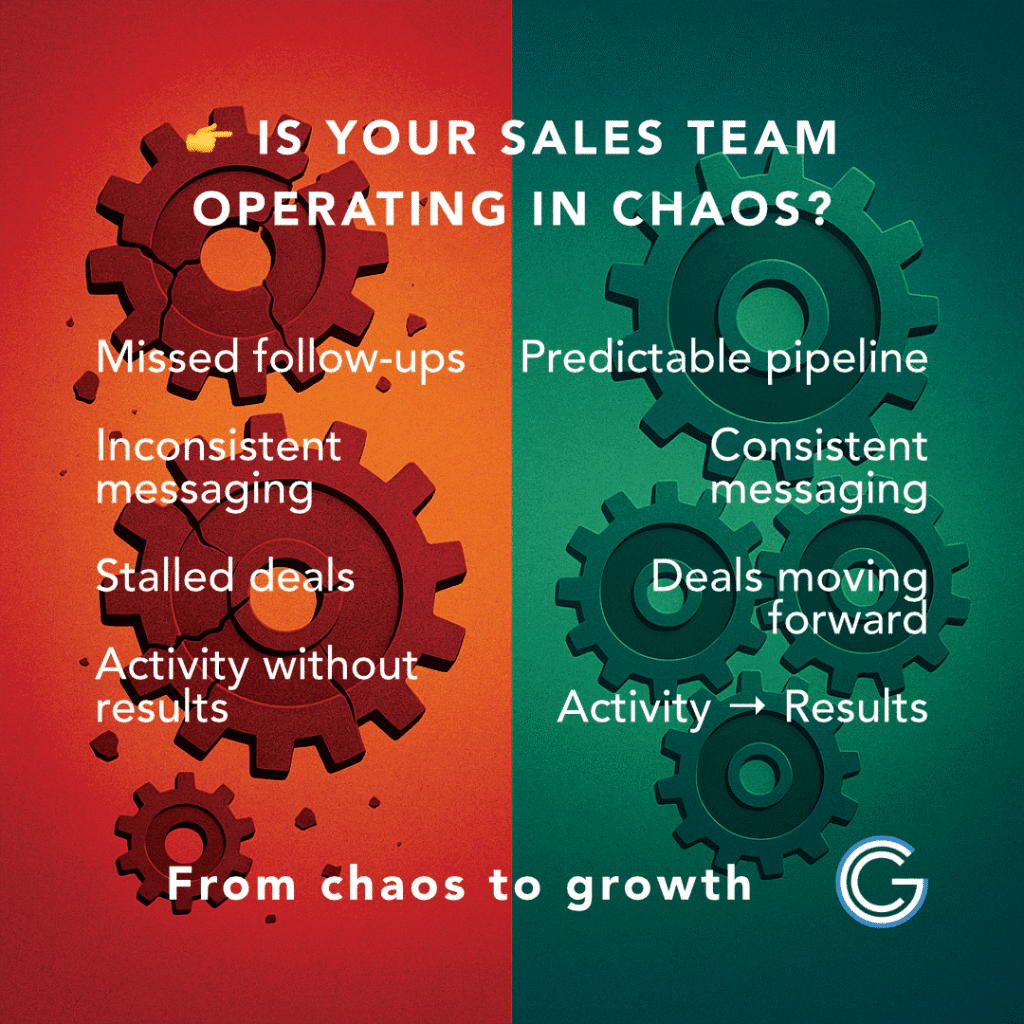
Leads get dropped, deals stall, and activity doesn’t translate into results. Leaders often blame people — when in reality, the real problem is a lack of structure.
Chaos doesn’t just cause inefficiency. Left unchecked, it quietly kills growth.
- Missed Follow-Ups: If your reps are constantly “getting back to it tomorrow,” opportunities are falling through the cracks. Every missed follow-up erodes trust and momentum, and prospects simply move on.
- Inconsistent Messaging: When every rep is telling the story differently, your brand looks disorganized. Prospects hear one thing from marketing, another from sales, and yet another from customer service. Mixed messages create hesitation — and hesitation kills deals.
- Stalled Deals: Without a clearly defined process, deals linger in the pipeline. Reps don’t know what the next step should be, so prospects aren’t guided forward. This stall-out is one of the most expensive symptoms of sales chaos.
- Activity Without Results: If your pipeline is full of activity but short on wins, chances are your team is busy, not productive. Cold calls, demos, proposals — without the right system in place, all that effort fails to convert into revenue.
- Leadership Blind Spots: Without visibility into the pipeline, leaders are forced to react instead of lead. Firefighting replaces strategy, and the team is left scrambling instead of executing with confidence.
Why Sales Chaos is So Costly
Sales chaos doesn’t just make things messy — it drains revenue in ways most organizations don’t measure.
- Lost opportunities → fewer closed deals.
- Longer sales cycles → slower cash flow.
- Burned-out reps → higher turnover.
- Distracted leaders → no time to scale.
Every day spent in chaos is a day your competitors pull ahead.
The Antidote to Chaos
The solution isn’t more activity — it’s better structure. High-performing sales teams run on a simple but powerful system:
- Clear Goals – Everyone knows what success looks like.
- Reliable Systems – Processes and tools support reps instead of slowing them down.
- Consistent Execution – Coaching, accountability, and metrics keep the team aligned.
- It’s simple — but not easy. Most teams break down at Step 2: Systems. Without systems, execution collapses under its own weight.
A Real-World Example
When I was asked to review a client’s go-to-market strategy, the diagnosis was obvious: too many resources were focused on the wrong segment.
We restructured the approach, built the right systems, and within nine months nearly doubled new customer acquisition.
The problem wasn’t effort. The problem was chaos.
How to Start Fixing Sales Chaos Today
You don’t need a full transformation on day one. Start with a quick audit
- Where are follow-ups being dropped?
- Where does messaging get inconsistent?
- Which deals sit in limbo the longest?
- Where do leaders lack visibility?
Find the weakest link and fix it first. Prioritize systems over activity, and make leadership consistency a non-negotiable.
Conclusion
Chaos drains revenue. Systems create predictable growth.
If your sales motion feels more like firefighting than forward progress, it’s time to replace chaos with clarity.
👉 Book a call with me to see if I can help bring order to your chaos.

Recent Comments